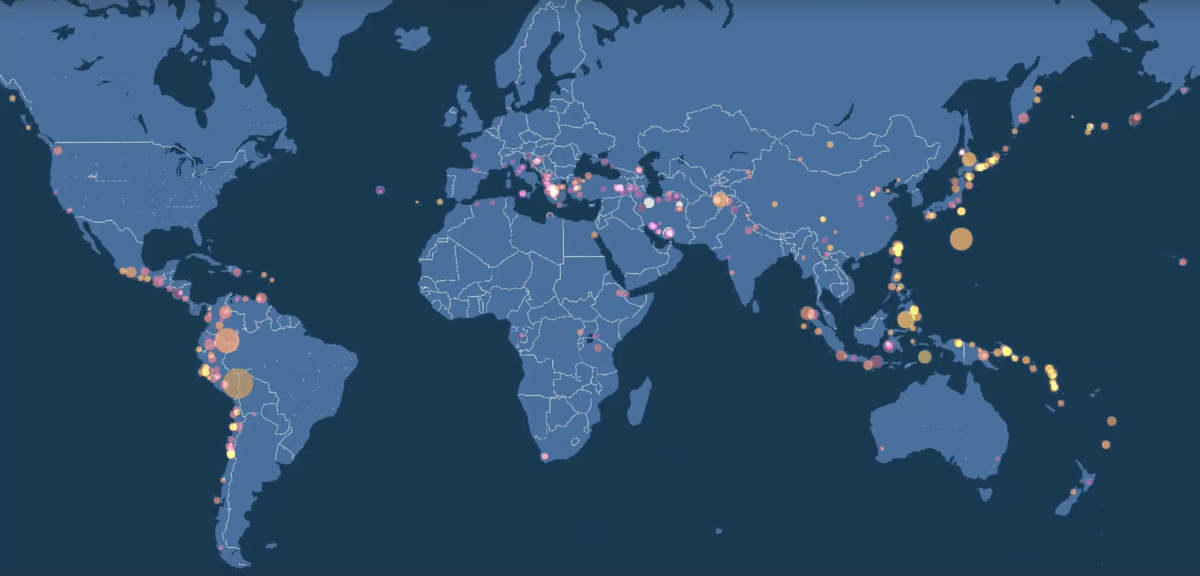
ACLED (Armed Conflict Location & Event Data Project) is the global standard for disaggregated conflict data — the dataset that researchers, journalists, and humanitarian organizations reach for when they need to know not just that a conflict is happening, but precisely where, when, and what type of violence is occurring.
Unlike aggregate conflict datasets that count "conflicts per country," ACLED records individual events: a battle on a specific date at specific coordinates, a protest in a named town, an explosion at a reported location. Each record captures the actors involved, estimated fatalities, and a narrative note describing the event. This granularity enables analysis that country-level conflict indicators cannot support.
The coverage is genuinely global. ACLED monitors countries across Africa, the Middle East, South Asia, Southeast Asia, Latin America, and increasingly Europe and North America, with weekly updates adding new events within days of their occurrence. The dataset currently holds tens of millions of events across more than 230 countries and territories.
For GIS analysis, ACLED data arrives as georeferenced point events that can be mapped directly, aggregated to administrative boundaries, or analyzed using density and clustering methods. Conflict hotspot identification, correlation analysis with displacement data, and temporal trend analysis are common applications. Organizations including UNHCR, OCHA, and the International Crisis Group use ACLED data to support operational decision-making in humanitarian response.
A key use case is early warning: because ACLED tracks protest and civil unrest events alongside armed conflict, the data provides leading indicators of escalation before violence intensifies. Several early warning systems combine ACLED event data with economic, political, and social variables to model conflict risk.
Access requires free registration at acleddata.com. The API provides programmatic access for automated updates, and bulk downloads are available in CSV and Excel formats with full documentation of the coding methodology.
