Data Sources/Google Earth Engine

Google Earth Engine

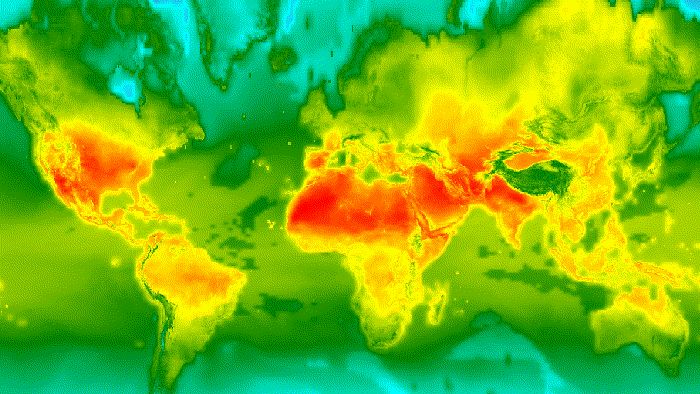
Google Earth Engine provides free, cloud-based access to satellite imagery, climate data, and geospatial analytics.

Environmental Monitoring

Track environmental changes including deforestation, pollution levels, and ecosystem health using Earth observation data.

Climate Analysis

Analyze climate patterns, weather trends, and atmospheric conditions for research, risk assessment, and long-term planning.

Agriculture & Land Use

Monitor crop health, soil conditions, and land use changes for precision agriculture and sustainable land management.

Google Earth Engine

Google Earth Engine (GEE) is both a data catalog and a computing platform, and that combination is what makes it transformative. Most data sources on this page require you to download files, manage storage, and run processing locally — GEE eliminates all of that by colocating petabytes of satellite imagery and geospatial datasets with Google's cloud infrastructure.

The same analysis script that processes a single Landsat scene over a small study area can scale to the entire global archive without code changes, making planetary-scale time-series analysis, land cover classification, and change detection feasible from a browser or Python notebook.

For GIS professionals, GEE often functions as the processing engine that sits upstream of visualization and sharing tools. You run your analysis in Earth Engine — compositing imagery, computing indices, classifying land cover, training models — and export the results as GeoTIFFs or vectors that feed into Atlas, QGIS, or web applications.

The catalog itself is also valuable as a discovery mechanism: many of the datasets listed elsewhere on this page (Sentinel, Landsat, MODIS, ERA5, WorldClim, Dynamic World, ESA WorldCover) are available through GEE's indexed archive, meaning you can query, filter, and combine them programmatically without visiting multiple portals or managing file downloads.


Frequently Asked Questions

A cloud-based geospatial analysis platform from Google that provides free access to petabytes of satellite imagery and geospatial datasets along with computing infrastructure for large-scale analysis.

Free for academic research, education, and noncommercial use. Commercial users need a Google Cloud subscription with Earth Engine API access.

Landsat, Sentinel, MODIS, VIIRS, SRTM elevation, climate data (ERA5, WorldClim), land cover, population, nighttime lights, and hundreds more — over 900 public datasets in the catalog.

JavaScript (Code Editor in browser) and Python (earthengine-api package). Both provide full access to the Earth Engine API for data analysis and visualization.

Yes. You can export rasters (GeoTIFF), vectors (Shapefile, GeoJSON), and tables (CSV) to Google Drive, Google Cloud Storage, or as Earth Engine assets.

Details

CoverageGlobal
Layer TypeVector & Raster
Update FrequencyVaries by dataset
Categories
Remote Sensing
Visit sourceUse data in Atlas

Discover more data sources

OpenStreetMap

OpenStreetMap (OSM) is one of the best free and open-source geospatial data sources. With constantly updated roads, buildings, and land use data, OSM is perfect for GIS, urban planning, navigation, and research. It offers global coverage, multiple formats, and developer-friendly APIs. Whether you need offline maps, real-time updates, or detailed geographic features, OSM is an essential tool for spatial analysis.

Mapping

Eurostat

Eurostat provides harmonized European statistics for population, economy, and infrastructure.

Demographic

ERA5

Hourly global climate reanalysis data from 1940 to present at 31km resolution, produced by ECMWF.

Climate

Google Open Buildings

AI-derived building footprints for 1.8 billion buildings across Africa, South Asia, and Southeast Asia.

Mapping

American Community Survey

The American Community Survey (ACS) provides detailed U.S. demographic and socioeconomic data ideal for GIS analysis.

Demographic

Corine Land Cover

Standardized land cover maps for 39 European countries with change tracking from 1990 to 2018.

Remote Sensing, Mapping

ACLED — Armed Conflict Location & Event Data

ACLED (Armed Conflict Location & Event Data Project) provides free real-time data on political violence, conflict events, and protests globally. Used by researchers, NGOs, governments, and journalists to track and analyze conflict patterns with precise location and date information.

Conflict, Humanitarian, Real-time

Carbon Monitor

Carbon Monitor provides near-real-time estimates of daily CO₂ emissions from fossil fuel combustion and cement production globally, broken down by country and sector. Updated within days of occurrence, it enables tracking of emissions trends, policy impacts, and pandemic-related changes.

Climate, Environmental, Real-time