Data Sources/OpenCage Geocoding API

OpenCage Geocoding API

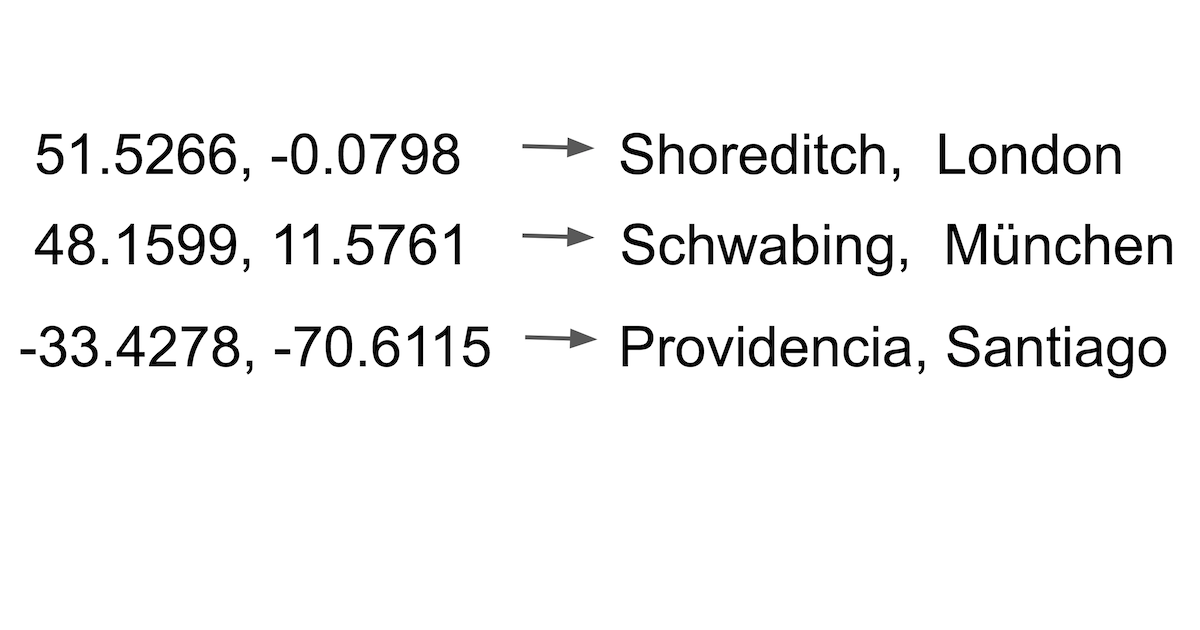
OpenCage provides a straightforward geocoding API built on open data sources including OpenStreetMap, GeoNames, and others. It offers forward and reverse geocoding for addresses and coordinates globally, with transparent pricing and no lock-in to a single data provider.

OpenCage Geocoding API

OpenCage is the geocoding API of choice for developers and data teams who want reliable address-to-coordinate conversion without Google Maps' pricing uncertainty or terms of service restrictions.

The API aggregates results from multiple open data sources — primarily OpenStreetMap, plus GeoNames for place names, DAFIF for airports, and other domain-specific sources — combining them to return the best available result for any given query. When you submit an address, OpenCage queries these sources in parallel and returns a ranked list of matches with confidence scores, letting applications handle ambiguous queries appropriately.

The response object is notably rich compared to basic geocoding services. Beyond coordinates, each result includes structured address components, the geographic bounds of the result (useful for map display), timezone information, calling code, currency, and confidence level. For applications that need to display maps around geocoded results or validate that an address is in an expected region, this context eliminates secondary API calls.

For bulk geocoding — converting a spreadsheet of addresses to coordinates — OpenCage provides sensible rate limits and straightforward batch processing. The API's permissive terms allow results to be stored and used in applications without the per-use restrictions that complicate Google Maps usage in many products.

The free tier at 2,500 requests/day covers most development needs and small production workloads. Volume pricing is available for high-throughput applications. Unlike usage-based pricing models where costs can spike unexpectedly, OpenCage's plans are predictable — a consideration that matters for teams budgeting data infrastructure costs.

Client libraries are available for Python, Ruby, PHP, Java, Go, and other languages, reducing integration effort for most development environments.

Frequently Asked Questions

A geocoding API that converts addresses to coordinates (forward geocoding) and coordinates to addresses (reverse geocoding), built on open data sources including OpenStreetMap, GeoNames, and others.

OpenCage has a free tier with 2,500 API requests per day — sufficient for development and small projects. Paid plans start at low monthly rates for higher volumes, with no per-request surprises.

Accuracy depends on the source data quality for a given location. In countries with strong OpenStreetMap coverage (Western Europe, North America), results are typically very accurate. In areas with sparse OSM data, results may be at town or district level rather than street level.

Coordinates, formatted address, address components (country, state, city, postcode, street), confidence score, bounds, timezone, currency, and what3words location. Responses also indicate which underlying data source was used.

OpenCage is built on open data (no vendor lock-in), has transparent and predictable pricing, and works well for bulk geocoding. Google has broader POI coverage and often better accuracy in developing countries, but is more expensive at scale and has restrictive terms of service.

Details

CoverageGlobal
Layer TypeAPI
Update FrequencyContinuous
Categories
GeocodingDeveloper Tools
Visit sourceUse data in Atlas

Discover more data sources

Sentinel Hub

Cloud-based platform for streaming and processing Sentinel, Landsat, and other satellite imagery through APIs.

Remote Sensing

Marine Regions

Marine Regions is a standard list of georeferenced marine names and boundaries combining multiple authoritative sources, including Exclusive Economic Zones (EEZs), the IHO Sea Areas, and other marine geographic features. Essential for ocean GIS, fisheries management, and maritime policy analysis.

Marine, Boundaries, Environmental

Global Administrative Areas

Global Administrative Areas (GADM) provides free, high-resolution administrative boundary data for every country. With detailed subdivisions, multi-level GIS support, and global coverage, it's a must-have resource for urban planning, policy research, and geospatial analysis.

Mapping

United States Census Bureau

The U.S. Census Bureau provides the core demographic and geographic data for GIS mapping in the U.S.

Demographic

Mapillary

Crowdsourced street-level imagery covering 190+ countries, with AI-detected map features like signs and road markings.

Mapping

ThinkHazard

ThinkHazard! offers accessible natural hazard risk assessments and guidance for over 190 countries. Use it to identify risks like floods, earthquakes, and heatwaves for planning and development projects.

Demographic

planet.osm

Continually updated snapshot of the data collected by OpenStreetMap (OSM)

Mapping

Overture Maps

Overture Maps offers open, high-quality map data by integrating contributions from various organizations, ensuring comprehensive and accurate geospatial information.

Mapping