Data Sources/Overture Maps

Overture Maps

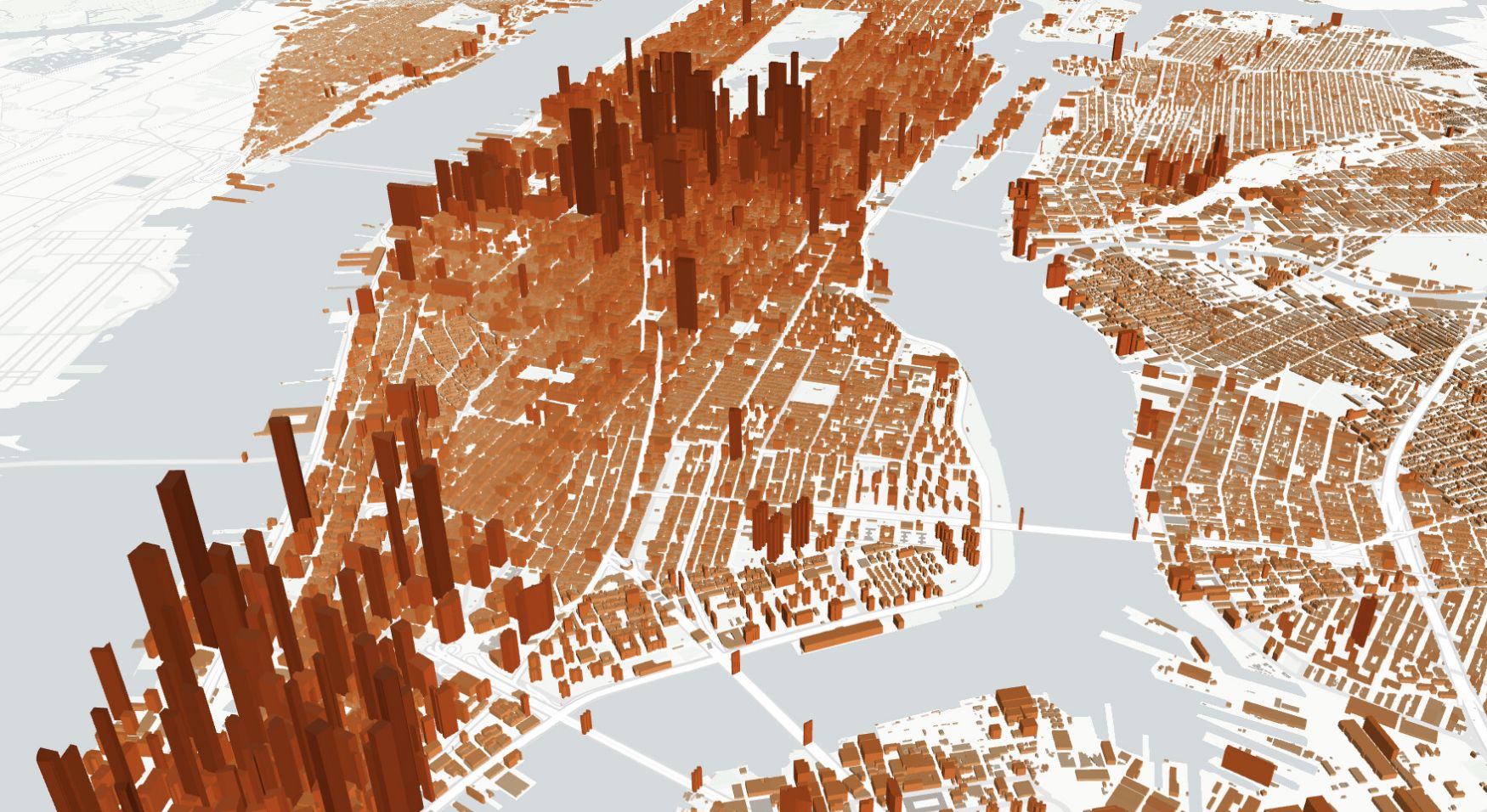
Overture Maps offers open, high-quality map data by integrating contributions from various organizations, ensuring comprehensive and accurate geospatial information.

Urban Planning

Plan urban development, zoning, and infrastructure improvements using land cover, demographic, and transportation data.

Transportation Planning

Design and optimize transportation networks, transit systems, and mobility infrastructure using spatial data.

Site Selection

Evaluate potential locations for facilities, infrastructure, or investments based on multi-criteria spatial analysis.

Overture Maps

Overture Maps is an attempt to solve the biggest problem with open map data: using it reliably at scale. OpenStreetMap provides extraordinary coverage but has inconsistent schemas, no persistent entity IDs, and no built-in quality validation. Corporate and government datasets add valuable data but don't interoperate with each other. Overture conflates these sources — OSM, Microsoft Building Footprints, Meta places data, government boundaries and addresses — into standardized themes with consistent schemas, unique IDs for every entity through the Global Entity Reference System (GERS), and automated quality checks.

For teams building products on open map data rather than doing one-off analysis, this structure matters: persistent IDs mean you can track changes to specific buildings or places across releases, and standardized schemas mean you don't have to write custom parsers for every data source.

The practical result is a dataset that's more immediately usable for production applications than raw OSM, at the cost of some attribute richness and update latency. OSM still provides more detailed community-contributed tags and faster per-feature updates, so the two serve different needs.

Overture is designed for the use cases where consistency, deduplication, and cross-source linking are more important than having the latest individual edits — routing engines, place search, building analytics, and address matching at global scale. In Atlas, the Overture Maps layer is available with one click, automatically styled and ready for exploration and overlay.


How to use Overture Maps in Atlas?

Frequently Asked Questions

An open data initiative founded by Amazon, Meta, Microsoft, and TomTom that combines data from OpenStreetMap, government sources, and corporate datasets into clean, structured, and interoperable map layers.

Buildings, places (POIs), transportation networks, administrative boundaries, addresses, base land use, and infrastructure. Each theme follows a standardized schema.

Yes. All Overture Maps data is freely available under open licenses (CDLA Permissive 2.0 and ODbL for OSM-derived data).

Overture builds on OSM data but adds conflation with other sources, standardized schemas, unique IDs for entities, and quality validation. OSM provides raw community-contributed data.

GeoParquet, a cloud-native columnar format optimized for large-scale geospatial queries. Data is available on AWS, Azure, and via direct download.

Details

CoverageGlobal
Layer TypeVector
Update FrequencyQuarterly
Categories
Mapping
Use data in Atlas

Discover more data sources

Global Solar Atlas

Free solar irradiation and PV power potential data at 250m resolution for any location on Earth.

Climate

Natural Earth

Natural Earth is a free and open-source GIS data source, providing high-quality vector and raster datasets for cartographers, researchers, and GIS professionals. With political boundaries, physical geography, and infrastructure data, it's easy to use and well-organized. Available in multiple scales and standard formats, Natural Earth is a must-have for mapping and spatial analysis projects. Download it today!

Mapping

CHELSA

Climate datasets used to study environmental and geographic phenomena

Remote Sensing

Geofabrik

Geofabrik provides free, structured OpenStreetMap (OSM) data extracts for GIS, navigation, and urban planning.

Mapping

Global Forest Watch

Global Forest Watch (GFW) is a free, real-time forest monitoring platform providing satellite data on deforestation, wildfires, and land use.

Biodiversity

Humanitarian Data Exchange

The Humanitarian Data Exchange (HDX) is an open data platform for humanitarian crises and development.

Demographic

Carbon Monitor

Carbon Monitor provides near-real-time estimates of daily CO₂ emissions from fossil fuel combustion and cement production globally, broken down by country and sector. Updated within days of occurrence, it enables tracking of emissions trends, policy impacts, and pandemic-related changes.

Climate, Environmental, Real-time

FIRMS

Near real-time active fire detections from NASA satellites, updated multiple times daily with 3–4 hour latency.

Remote Sensing, Climate