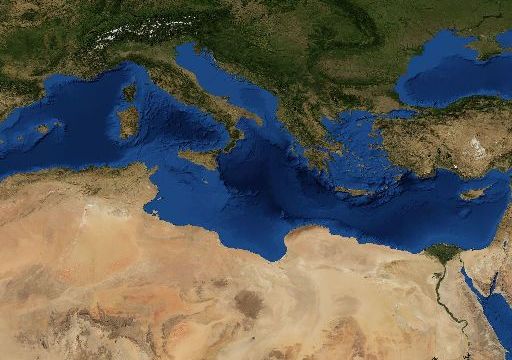
NASA Earthdata is the umbrella portal for the largest collection of freely available Earth science data in the world — over 12,400 datasets spanning land, ocean, atmosphere, and cryosphere, collected by dozens of satellite missions, airborne campaigns, and ground stations. Many of the individual data sources listed elsewhere on this page (MODIS, Landsat, VIIRS, SRTM) are ultimately archived and distributed through Earthdata's network of Distributed Active Archive Centers (DAACs).
For GIS professionals, Earthdata functions both as a discovery mechanism — finding which NASA dataset covers a specific variable, region, and time period — and as the access layer for downloading or streaming the data itself.
What distinguishes NASA Earthdata from platforms like Google Earth Engine or Microsoft Planetary Computer is that it's the authoritative archive, not a cloud analysis environment. You come to Earthdata to find and retrieve the definitive version of a dataset, then process it in your own tools — whether that's Python, R, QGIS, Atlas, or a cloud compute platform.
The Common Metadata Repository (CMR) API makes the full catalog searchable programmatically, while tools like Earthdata Search and Worldview provide browser-based discovery and near-real-time visualization. NASA's ongoing migration to cloud-hosted, cloud-optimized formats in AWS is also closing the gap with cloud platforms by making it possible to stream just the tiles and variables you need without downloading entire granules.
