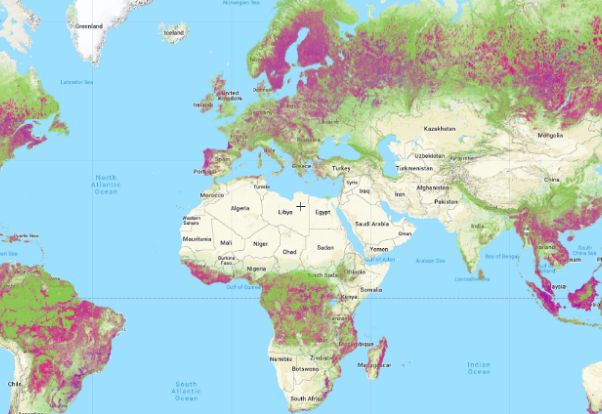
Global Forest Watch (GFW) has changed how deforestation is tracked and acted on. Before GFW, detecting forest loss at scale required commissioning satellite analysis or waiting for annual reports — by the time data reached decision-makers, the damage was often months old. GFW compressed that timeline to days by building an open platform that combines near-real-time deforestation alerts with two decades of annual tree cover change data, all freely accessible.
Built by the World Resources Institute with data from NASA, ESA, and the University of Maryland, it's now the standard monitoring tool used by conservation organizations, governments, commodity supply chain auditors, and law enforcement agencies tracking illegal logging.
The platform's real power is in combining detection with action. Alert systems notify subscribers when forest loss is detected in their areas of interest, and the underlying Hansen dataset provides the historical baseline to put that loss in context — whether it's part of a long-term trend or an anomalous event. GFW also layers in fire alerts, carbon stock estimates, protected area boundaries, and land use classifications, so analysts can assess not just where deforestation is happening but what's driving it and what's at stake.
For GIS workflows, the data downloads in standard formats and integrates with the broader ecosystem of environmental layers — overlay tree cover loss with GBIF species records for biodiversity impact assessment, or combine it with land cover from ESA WorldCover for landscape-level change analysis.
