Data Sources/Copernicus Open Access Hub

Copernicus Open Access Hub

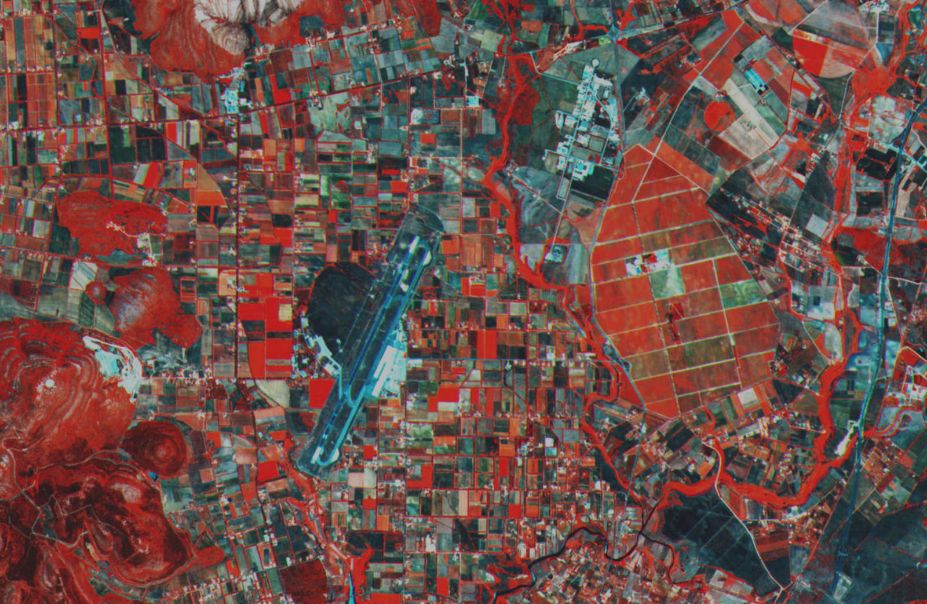
Copernicus Open Access Hub provides free, high-resolution satellite imagery from the Sentinel satellite program.

Environmental Monitoring

Track environmental changes including deforestation, pollution levels, and ecosystem health using Earth observation data.

Climate Analysis

Analyze climate patterns, weather trends, and atmospheric conditions for research, risk assessment, and long-term planning.

Disaster Response

Support rapid disaster assessment, emergency management, and recovery efforts with real-time and historical hazard data.

Copernicus Open Access Hub

The Copernicus programme is the largest Earth observation system in operation, and for many GIS professionals it serves as the default source of free, high-cadence satellite imagery.

Where commercial providers charge per scene, Copernicus delivers global coverage across optical, radar, and atmospheric sensors on a daily to weekly cycle — with no licensing restrictions. This combination of spatial resolution, revisit frequency, and open access has made Sentinel data the foundation for workflows ranging from agricultural monitoring and urban expansion tracking to disaster response and air quality analysis.

What sets Copernicus apart from other open satellite programs is breadth. The Sentinel constellation covers optical multispectral (Sentinel-2), synthetic aperture radar (Sentinel-1), ocean and land surface monitoring (Sentinel-3), atmospheric composition (Sentinel-5P), and sea level altimetry (Sentinel-6) — all under one programme with consistent data policies.

On top of raw imagery, Copernicus operates six thematic services that produce analysis-ready products for atmosphere, marine, land, climate, security, and emergency management. Data is available through the Copernicus Data Space Ecosystem as well as cloud platforms like Google Earth Engine, AWS, and Microsoft Planetary Computer, in formats including GeoTIFF, NetCDF, and SAFE.

How to use Copernicus Open Access Hub in Atlas?

Frequently Asked Questions

The EU's Earth observation programme, providing free satellite data from the Sentinel missions along with value-added services for atmosphere, marine, land, climate, security, and emergency management.

Sentinel-1 (radar/SAR), Sentinel-2 (multispectral optical at 10m), Sentinel-3 (ocean and land monitoring), Sentinel-5P (atmospheric chemistry), and Sentinel-6 (sea level altimetry).

Yes. All Sentinel data is free and open under the Copernicus data policy, with no restrictions on commercial or non-commercial use.

Through the Copernicus Data Space Ecosystem (dataspace.copernicus.eu), which replaced the old Open Access Hub. Data is also available via Google Earth Engine, AWS, and Microsoft Planetary Computer.

10 meters for visible and NIR bands, 20 meters for vegetation red-edge and SWIR bands, and 60 meters for atmospheric correction bands. Revisit time is 5 days at the equator.

Details

CoverageGlobal
Layer TypeRaster
Update FrequencyDaily
Categories
Remote Sensing
Visit sourceUse data in Atlas

Discover more data sources

FEMA Flood Maps

Official U.S. flood hazard zones, base flood elevations, and floodplain boundaries used for insurance and planning.

Mapping, Climate

CHELSA

Climate datasets used to study environmental and geographic phenomena

Remote Sensing

LandsatLook Viewer

LandsatLook Viewer is a free, easy-to-use tool for accessing Landsat satellite imagery. With decades of historical data, high-resolution multispectral images, and global coverage, it's a top resource for GIS professionals and researchers.

Remote Sensing

OS Data Hub

OS Data Hub provides free and premium geospatial data for Great Britain, including detailed maps, road networks, elevation models, and administrative boundaries.

Mapping

OpenStreetMap

OpenStreetMap (OSM) is one of the best free and open-source geospatial data sources. With constantly updated roads, buildings, and land use data, OSM is perfect for GIS, urban planning, navigation, and research. It offers global coverage, multiple formats, and developer-friendly APIs. Whether you need offline maps, real-time updates, or detailed geographic features, OSM is an essential tool for spatial analysis.

Mapping

World Bank Data

The most reputable sources for comprehensive global data, offering insights crucial for economic development, policymaking, and understanding international dynamics

Mapping

Office for National Statistics

The Office for National Statistics (ONS) is the UK's go-to source for census, population, and geographic data.

Demographic

Statistics Canada

Statistics Canada provides essential data and geographic files for mapping population, housing, jobs, and health in Canada.

Demographic