CHELSA

Climate datasets used to study environmental and geographic phenomena

Climate Analysis

Analyze climate patterns, weather trends, and atmospheric conditions for research, risk assessment, and long-term planning.

Agriculture & Land Use

Monitor crop health, soil conditions, and land use changes for precision agriculture and sustainable land management.

Biodiversity & Conservation

Monitor species habitats, protected areas, and ecosystem changes to support conservation and biodiversity management.

CHELSA

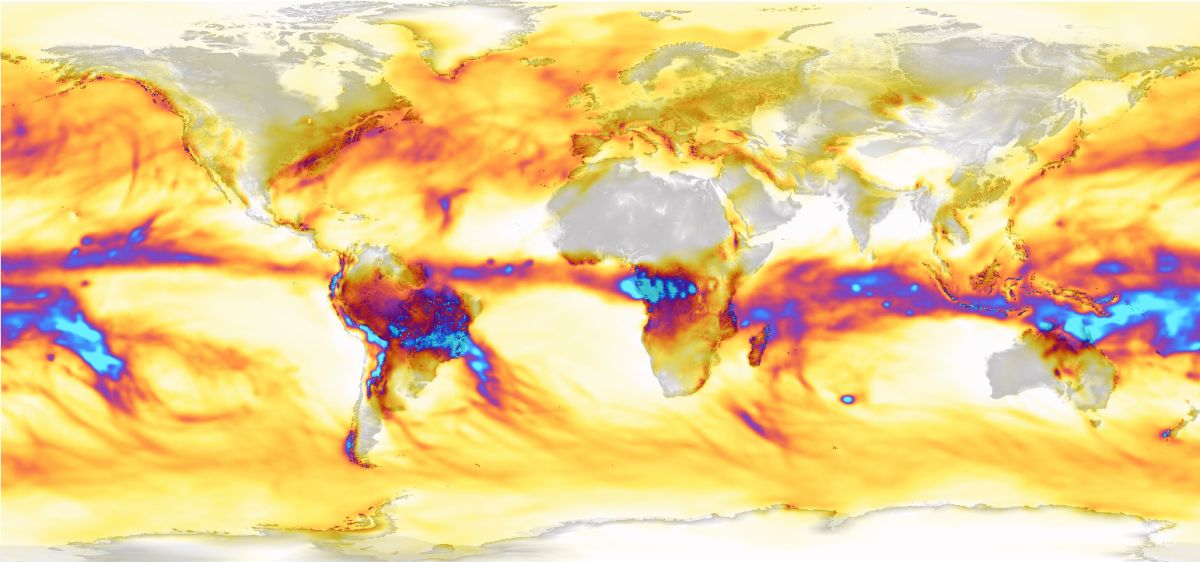
CHELSA (Climatologies at High resolution for the Earth's Land Surface Areas) is one of the most widely used climate datasets in ecology, biogeography, and environmental modeling.

Developed at the Swiss Federal Institute for Forest, Snow and Landscape Research (WSL), it provides global temperature and precipitation climatologies derived from ERA reanalysis data with mechanistic downscaling that accounts for how terrain shapes local climate. This makes CHELSA a strong choice for any spatial analysis where topography matters — species distribution modeling in mountain ranges, agricultural suitability assessments in varied terrain, or climate risk mapping across regions with complex elevation gradients.

CHELSA's 19 bioclimatic variables are a standard input for habitat and ecological niche models, and the availability of matching CMIP6 projections means you can run the same models against future climate scenarios without switching datasets or resolution.

All layers are distributed as GeoTIFFs, so they load directly into any raster-capable GIS platform, including Atlas. For researchers and analysts working at landscape to continental scales, CHELSA provides a consistent, high-resolution climate baseline that pairs well with land cover, soil, and biodiversity layers.


Frequently Asked Questions

Climatologies at High resolution for the Earth's Land Surface Areas — a high-resolution (1 km) global climate dataset providing temperature and precipitation climatologies based on statistical downscaling of global reanalysis data.

30 arc-seconds (~1 km) globally, matching WorldClim's finest resolution. CHELSA uses different downscaling methods that better account for orographic effects on precipitation.

Yes. All CHELSA datasets are freely available for download in GeoTIFF format from chelsa-climate.org.

Both provide 1 km climate grids, but CHELSA uses mechanistic downscaling for precipitation (accounting for wind and orographic effects), while WorldClim uses statistical interpolation. CHELSA often performs better in mountainous regions.

Yes. CHELSA provides downscaled CMIP6 climate projections for multiple scenarios (SSP1-2.6 through SSP5-8.5) at the same 1 km resolution as the baseline climatology.

Details

CoverageGlobal
Layer TypeRaster
Update FrequencyStatic
Categories
Remote Sensing
Visit sourceUse data in Atlas

Discover more data sources

Marine Regions

Marine Regions is a standard list of georeferenced marine names and boundaries combining multiple authoritative sources, including Exclusive Economic Zones (EEZs), the IHO Sea Areas, and other marine geographic features. Essential for ocean GIS, fisheries management, and maritime policy analysis.

Marine, Boundaries, Environmental

Office for National Statistics

The Office for National Statistics (ONS) is the UK's go-to source for census, population, and geographic data.

Demographic

GBIF

Over 2.5 billion georeferenced species occurrence records from the world's largest open biodiversity platform.

Biodiversity

Microsoft Building Footprints

AI-derived building footprints for over 1.2 billion buildings worldwide, free and open for GIS analysis.

Mapping

Global Human Settlement Layer (GHSL)

The Global Human Settlement Layer (GHSL) is a free dataset from the European Commission's Joint Research Centre mapping human settlements, population distribution, and urban extent globally from 1975 to present. Used for urban growth analysis, disaster risk assessment, and population modeling.

Demographics, Urban, Remote Sensing

Eurostat

Eurostat provides harmonized European statistics for population, economy, and infrastructure.

Demographic

Microsoft Planetary Computer

Free cloud platform with petabytes of geospatial data and integrated compute for large-scale Earth science.

Remote Sensing, Climate

OS Data Hub

OS Data Hub provides free and premium geospatial data for Great Britain, including detailed maps, road networks, elevation models, and administrative boundaries.

Mapping