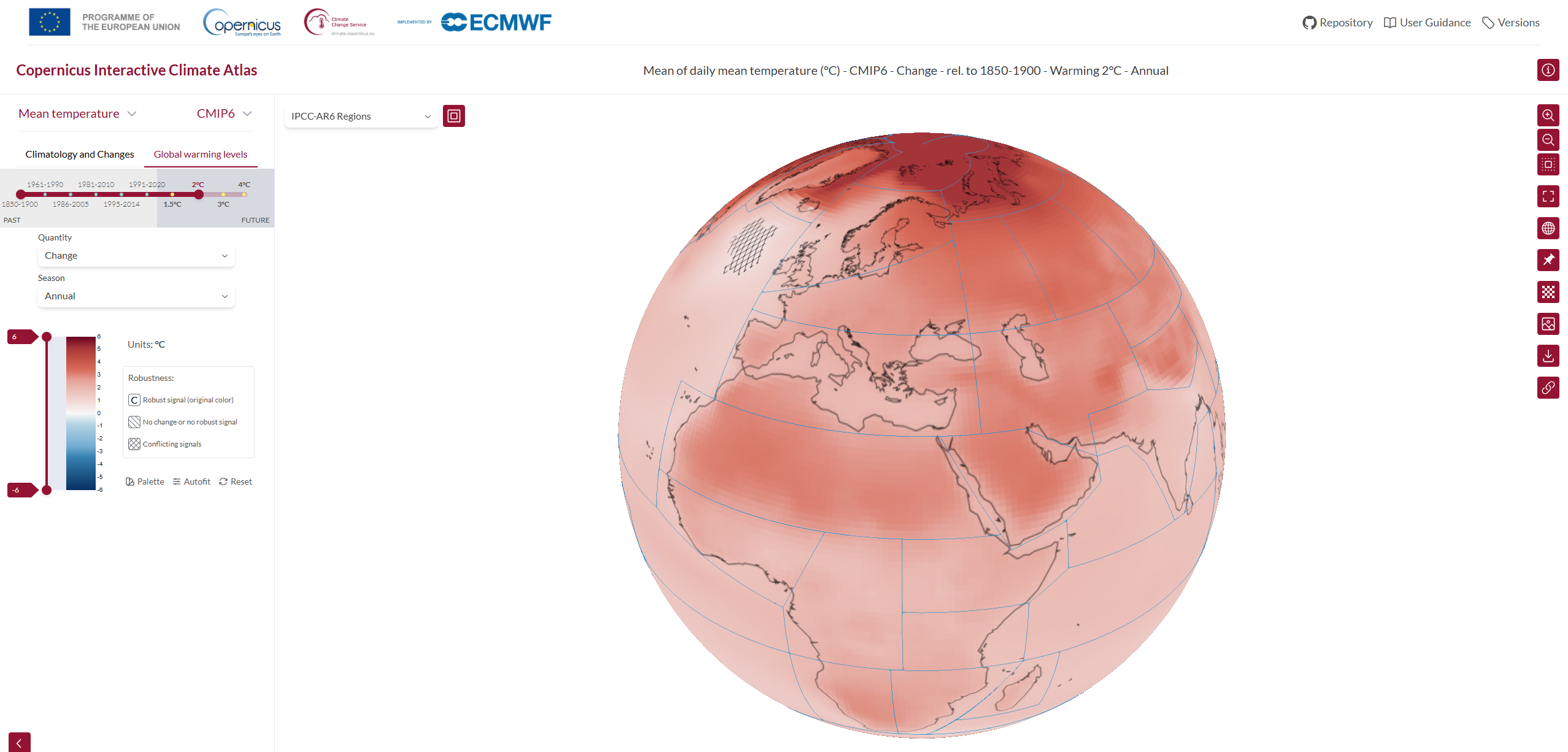
CLIM4ENERGY is a specialized climate data platform within the Copernicus Climate Change Service (C3S) that provides climate projections and energy-related indicators for supporting energy sector planning and decision-making. The platform delivers detailed climate and energy indicators with future projections to help energy professionals understand how climate change will affect energy systems.
The tool combines historical climate data with future climate projections to produce energy-specific indicators such as heating and cooling degree days, wind power potential, solar energy potential, and extreme weather impacts on energy infrastructure, supporting climate adaptation in the energy sector.
Key Features
- Energy-specific climate indicators including heating degree days, cooling degree days, and energy demand projections
- Renewable energy assessments showing wind and solar energy potential under different climate scenarios
- Future climate projections based on CMIP5 and CMIP6 climate models and RCP/SSP scenarios
- Interactive visualization tools for exploring climate data across different temporal and spatial scales
- Statistical analysis capabilities including trend analysis and extreme event frequency
- Data download options for detailed analysis and integration with energy planning tools
Applications
- Energy demand forecasting for heating and cooling requirements under climate change
- Renewable energy planning assessing future wind and solar resource availability
- Infrastructure resilience evaluating climate risks to energy generation and transmission
- Investment planning supporting long-term energy infrastructure development decisions
- Policy development informing climate adaptation strategies for the energy sector
- Research and development supporting climate-energy nexus studies
Climate Indicators
- Heating degree days (HDD) and cooling degree days (CDD) for energy demand estimation
- Wind speed and direction patterns affecting wind energy generation potential
- Solar radiation data for photovoltaic and solar thermal energy assessments
- Temperature extremes affecting energy infrastructure performance and reliability
- Precipitation patterns influencing hydroelectric generation and cooling water availability
- Storm frequency and intensity affecting energy system vulnerability
Temporal Coverage
- Historical data spanning multiple decades for baseline climate conditions
- Near-term projections (2021-2040) for immediate adaptation planning
- Mid-century projections (2041-2060) for medium-term strategic planning
- End-of-century projections (2081-2100) for long-term infrastructure planning
- Seasonal analysis capturing seasonal variations in energy demand and supply
Technical Specifications
- High-resolution climate data providing detailed spatial coverage across Europe and globally
- Multiple climate scenarios including RCP2.6, RCP4.5, RCP6.0, and RCP8.5 pathways
- Ensemble modeling incorporating uncertainty estimates from multiple climate models
- Statistical downscaling techniques for local-scale energy assessments
- Quality control ensuring data reliability and consistency for energy applications
CLIM4ENERGY serves as an essential resource for energy sector stakeholders working to understand and adapt to climate change impacts, supporting the transition to resilient and sustainable energy systems in a changing climate.
