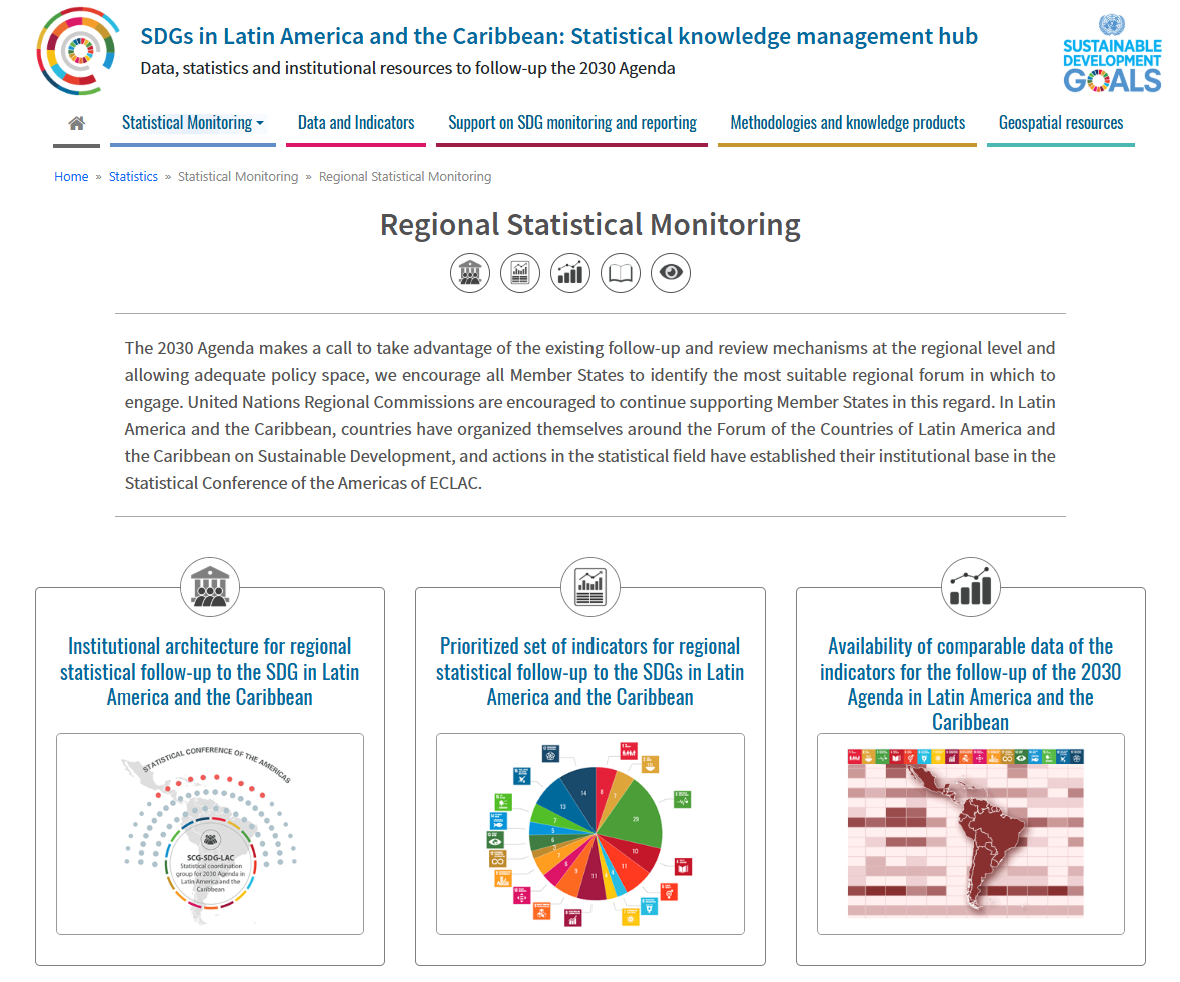
The SDGs in Latin America and the Caribbean: Statistical Knowledge Management Hub is a comprehensive regional platform that provides statistical data, indicators, and analysis for monitoring progress toward the Sustainable Development Goals (SDGs) in Latin America and the Caribbean. This initiative supports the implementation of the 2030 Agenda by offering standardized, comparable data across countries in the region.
The platform serves as a central repository for SDG indicators, enabling countries, organizations, and researchers to track progress, identify gaps, and support evidence-based decision-making for sustainable development planning in the region.
Key Features
- Regional SDG Database: Comprehensive collection of indicators for all 17 SDGs across LAC countries
- Country Profiles: Individual country dashboards showing SDG progress and performance
- Comparative Analysis: Tools for comparing progress across countries and sub-regions
- Data Visualization: Interactive charts, maps, and graphs for indicator trends and patterns
- Progress Monitoring: Track advancement toward 2030 targets with historical trend analysis
- Methodology Documentation: Detailed information on indicator definitions and calculation methods
- Multilingual Support: Available in Spanish, English, and Portuguese
SDG Coverage Areas
- Social Development: Poverty reduction, health, education, gender equality, and social inclusion indicators
- Environmental Sustainability: Climate action, biodiversity, water resources, and environmental protection metrics
- Economic Growth: Decent work, innovation, infrastructure, and sustainable economic development indicators
- Institutional Development: Governance, justice, peace, and institutional capacity indicators
- Partnerships: International cooperation, finance, and partnership indicators for development
- Regional Priorities: Focus areas specific to Latin American and Caribbean development challenges
Data Sources
- National statistical offices from LAC countries
- UN agencies and international organizations
- Regional development banks and institutions
- Academic research institutions and think tanks
- Civil society organizations and NGOs
- Government ministries and agencies
Applications
- Policy Planning: Support evidence-based policy development and SDG implementation strategies
- Progress Monitoring: Track national and regional advancement toward 2030 Agenda targets
- Performance Assessment: Evaluate effectiveness of development programs and interventions
- International Reporting: Support countries in preparing voluntary national reviews (VNRs)
- Research and Analysis: Provide data for academic research on sustainable development
- Public Accountability: Enable transparent monitoring of government commitments to SDGs
- Regional Cooperation: Facilitate knowledge sharing and best practices exchange
Use Cases
- Government Officials: Monitor national SDG progress and inform policy development
- International Organizations: Support regional development programs and technical assistance
- Development Banks: Assess development needs and design targeted investment programs
- Research Institutions: Conduct comparative studies on sustainable development progress
- Civil Society Organizations: Monitor government performance and advocate for SDG implementation
- Private Sector: Identify opportunities for sustainable business practices and social impact
- Media and Journalists: Report on development progress and hold governments accountable
