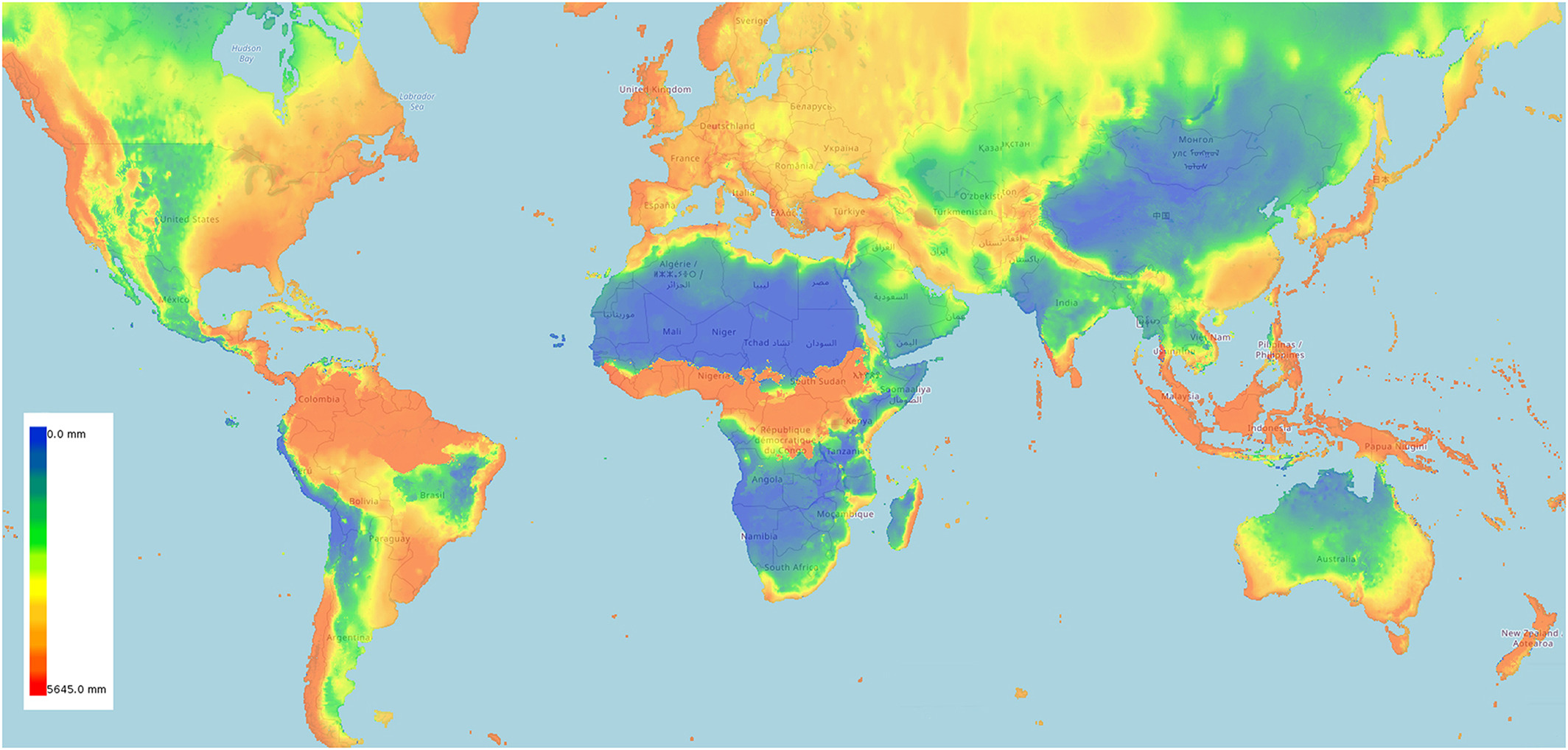
WorldClim is the most cited climate dataset in ecological research — and for good reason. Its 19 bioclimatic variables have become the de facto standard input for species distribution modeling, capturing ecologically meaningful patterns like temperature seasonality, precipitation of the driest quarter, and mean temperature of the warmest month at 1 km resolution globally.
When a biodiversity study uses "climate data" as a predictor layer, it almost certainly means WorldClim. The dataset interpolates weather station observations with corrections for elevation and topography, producing spatial climate surfaces that represent long-term averages rather than individual weather events — which is exactly what ecological niche models need.
WorldClim's position in the ecosystem is complementary to ERA5 and CHELSA rather than competitive. ERA5 provides hourly temporal resolution but at coarser spatial scale (31 km) — designed for weather, energy, and atmospheric analysis. CHELSA matches WorldClim's spatial resolution but uses different downscaling methods that perform better in mountainous terrain.
WorldClim's advantage is its entrenched position in ecology: the bioclimatic variables, the modeling community built around them, and the availability of matching CMIP6 future projections under the same framework mean that choosing WorldClim gives you compatibility with the largest body of published ecological research. For new projects in species modeling, agricultural suitability, or biodiversity assessment, WorldClim remains the practical default — use CHELSA as a complementary check, especially in topographically complex regions.
