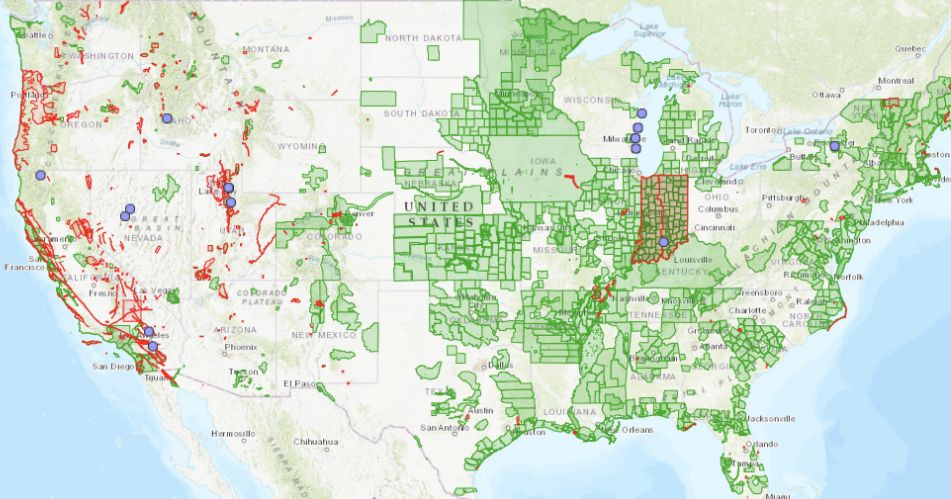
OpenTopography solves a practical problem with high-resolution elevation data: LiDAR point clouds are enormous, require specialized software to process, and are scattered across dozens of different agency and institutional repositories.
OpenTopography centralizes access to these datasets and adds cloud-based processing on top — so you can generate custom DEMs, hillshade maps, slope and aspect products, and hydrological derivatives from raw point clouds without downloading gigabytes of data and running processing pipelines locally. Funded by NSF and operated in partnership with USGS, it's the largest community-accessible portal for topographic data at resolutions from sub-meter LiDAR to global 30-meter satellite DEMs.
The platform matters most for projects that need elevation detail beyond what global DEMs provide. SRTM and Copernicus DEM give you 30-meter or 90-meter resolution worldwide, which is sufficient for regional terrain analysis — but infrastructure engineering, flood modeling at local scale, landslide assessment, forestry canopy studies, and archaeological surveys often need the sub-meter precision that only LiDAR delivers.
OpenTopography makes that data accessible without commissioning a survey or purchasing from commercial providers. Coverage is strongest in the United States (particularly through the USGS 3DEP program), with growing collections from Europe, New Zealand, and other regions contributed by research institutions. For areas where LiDAR hasn't been flown, OpenTopography also provides convenient access to the global satellite DEMs as a fallback.
