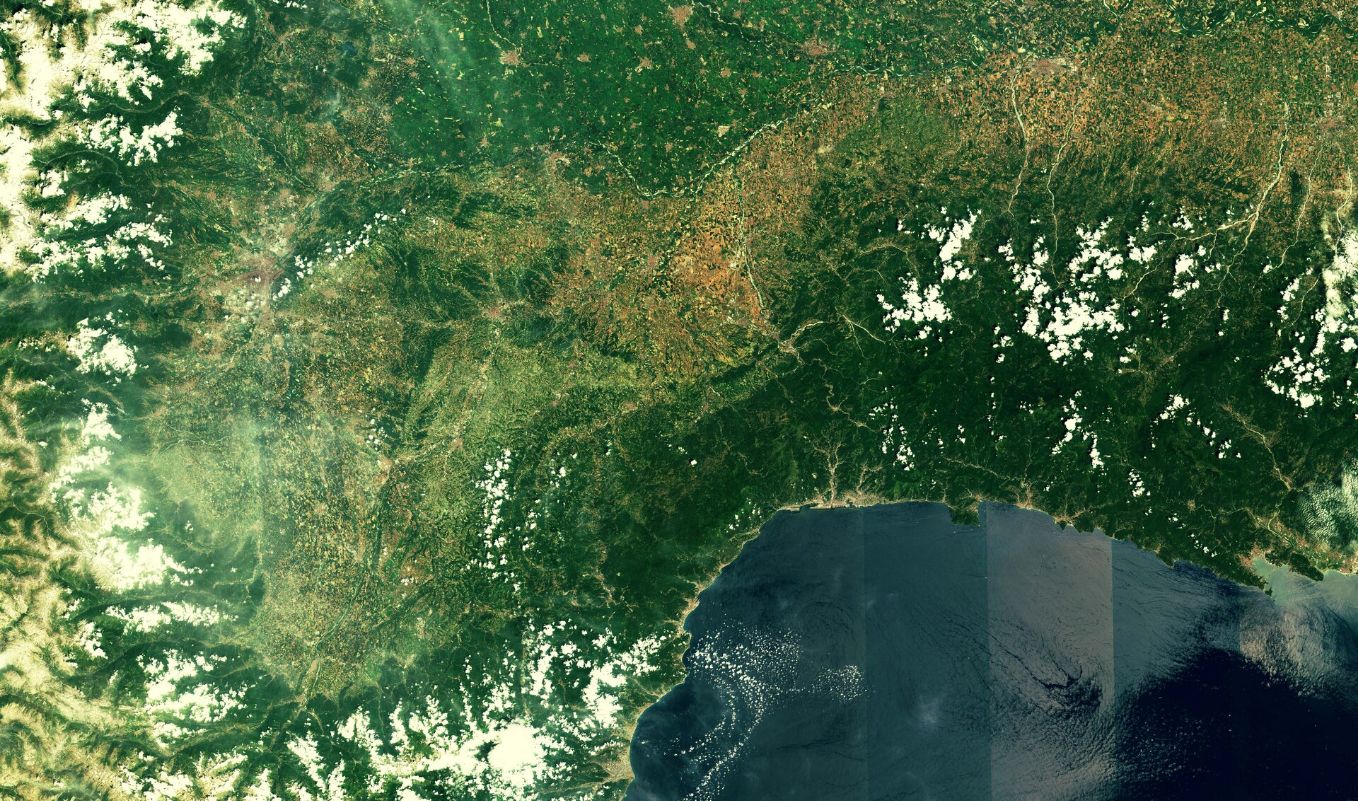
The European Space Agency (ESA) is the space component behind the Copernicus programme and the organization responsible for building, launching, and operating the Sentinel satellites.
While Copernicus is the EU-funded programme that sets the data policy and funds the thematic services, ESA manages the missions themselves — and maintains an Earth observation archive that stretches back over 30 years when including legacy missions like ERS and Envisat. For GIS professionals, this means ESA is both the source of the most widely used free satellite imagery today and a gateway to historical records that predate the Sentinel era.
What makes the ESA ecosystem particularly valuable is the range of sensing modalities under one open data policy: optical multispectral, synthetic aperture radar, ocean altimetry, atmospheric chemistry, soil moisture, and polar ice monitoring all come from ESA-operated missions. This lets you build multi-sensor analyses — combining radar-based flood detection with optical land cover change, or pairing atmospheric pollution data with surface temperature observations — without navigating different licensing terms or data providers.
The archive depth also supports long-term trend studies: linking Envisat records from the 2000s with current Sentinel data gives you two decades of comparable observations for climate, coastal, and land surface research.
